MIM Bed To Bed Concept
The stretchers used in primary rescue and emergency medical services usually do not allow for adequate positioning of intensive care patients, and central venous and arterial accesses are often difficult to reach when immobilisation is necessary:
raising the upper body, relaxed abdominal positioning and differentiated leg positioning (possibly with extensions) are difficult to achieve. Anti-decubitus mattresses are bulky and are therefore not used. Intensive care equipment such as full monitors, intensive care ventilators, perfusors, infusion pumps, vacuum systems, IABP and ECMO cannot be clearly arranged on stretcher systems. For this reason, the orderly intensive care supply and therapy structure is usually abandoned for transport and reduced to a minimum for logistical reasons.
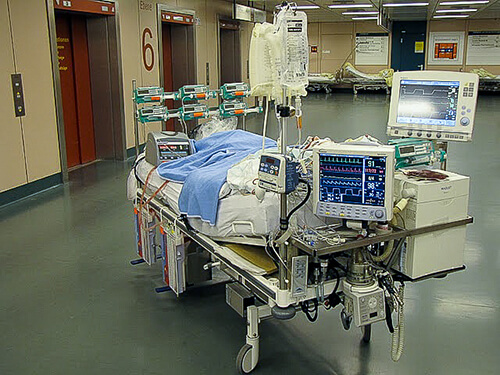
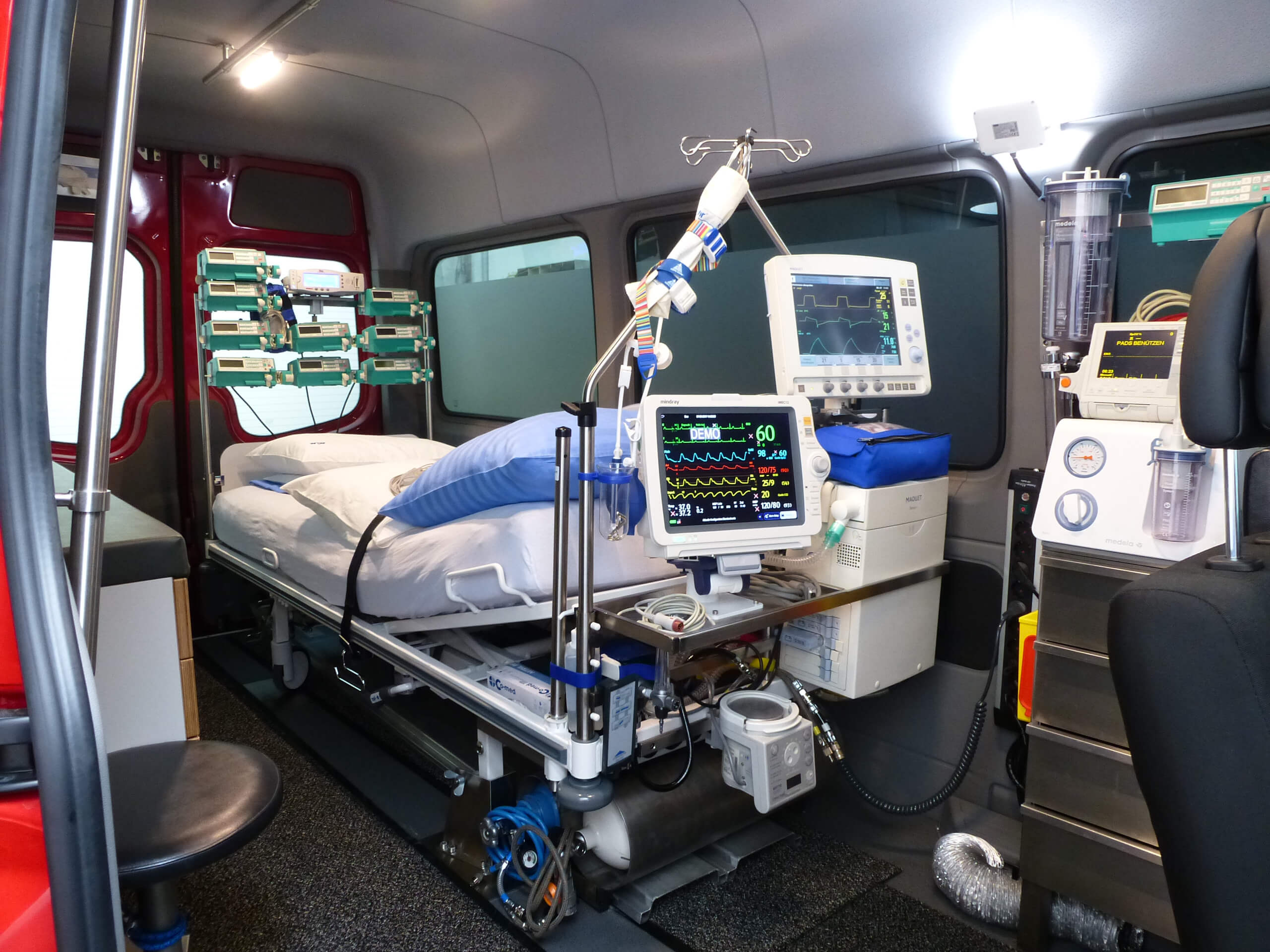
In order to implement a consistent intensive care setup during transport, positioning in a large intensive care bed is essential.
Gentle repositioning using slides or a roll board, careful catecholamine replacement under continuous arterial pressure measurement and direct ventilator replacement without PEEP loss help to minimise ‘repositioning trauma’.
The system-independent transport unit with intensive care ventilator, full monitoring, sufficient infusion pumps, perfusors, anti-decubitus mattress (pneumatic/fixed) and the 2 x 1 m lying surface enable the safe bed-to-bed concept to be implemented in addition to the personnel equipment.
The Bed To Bed range of services
- 1:1 implementation of the respective intensive care unit setup
- Intensivr care ventilator
- Full monitor
- Unlimited perfusor and infusion pump units
- No interruptions to treatment in lift and corridor structures
- No restrictions on the supply situation when loading and unloading the intensive care vehicle